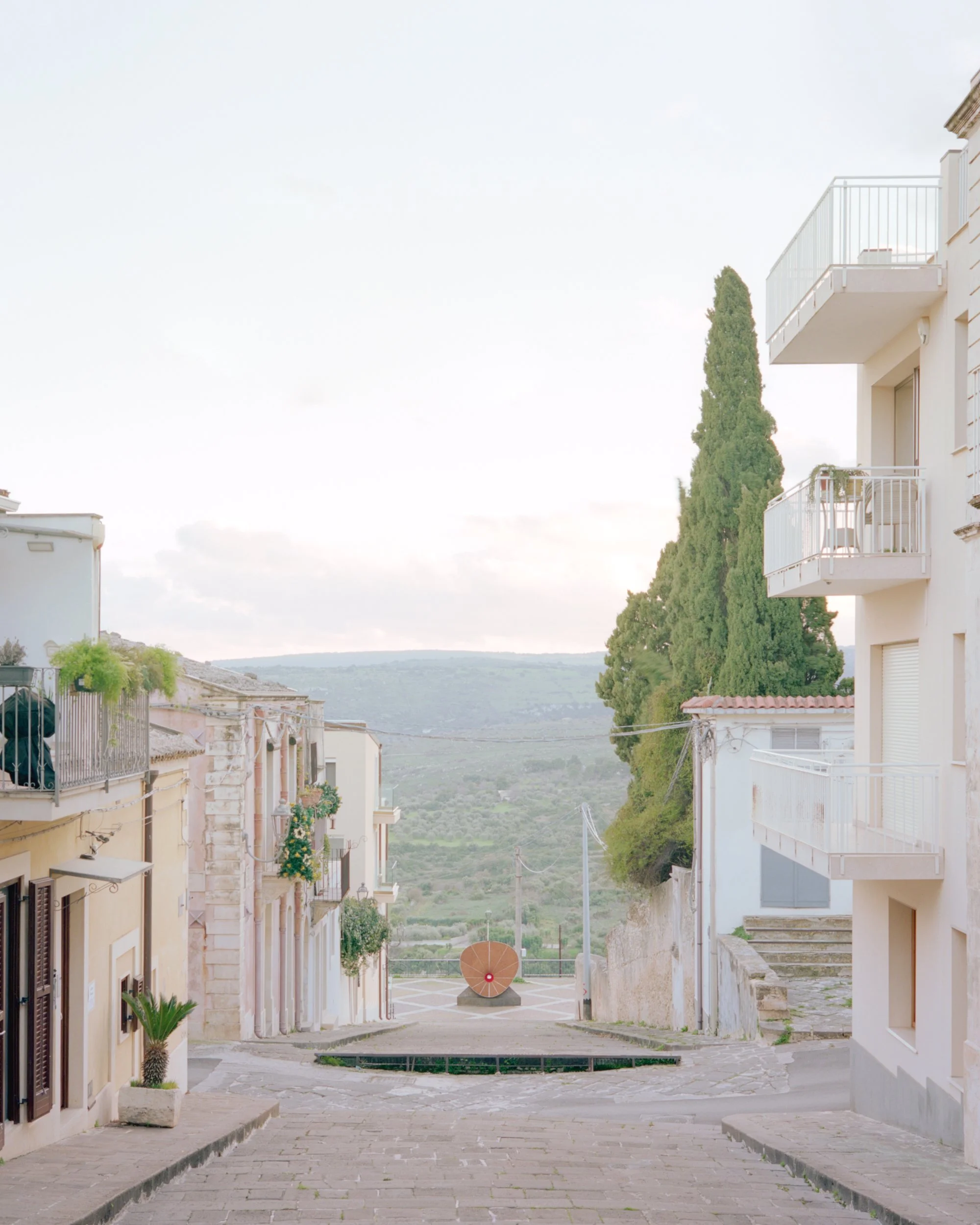
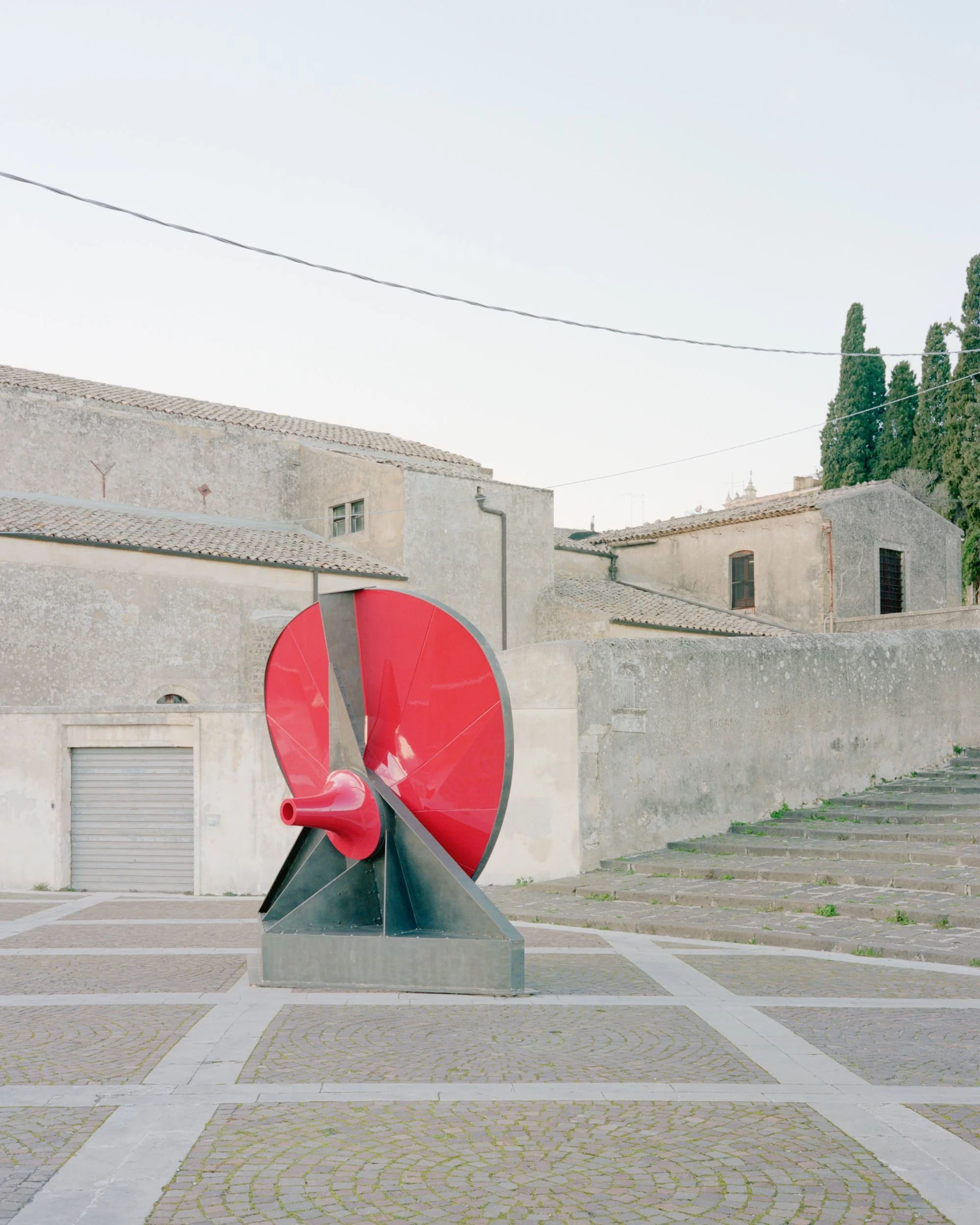
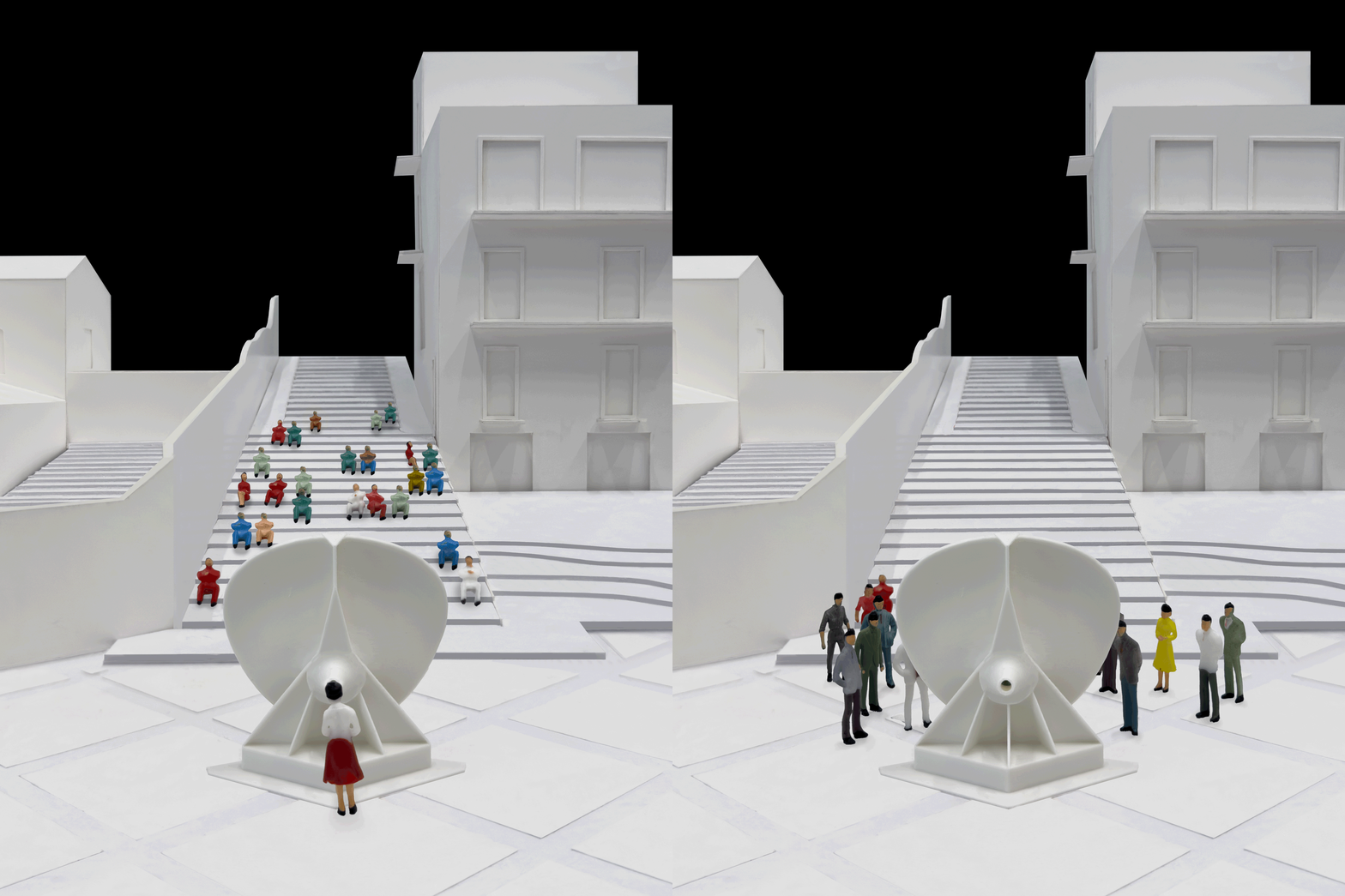
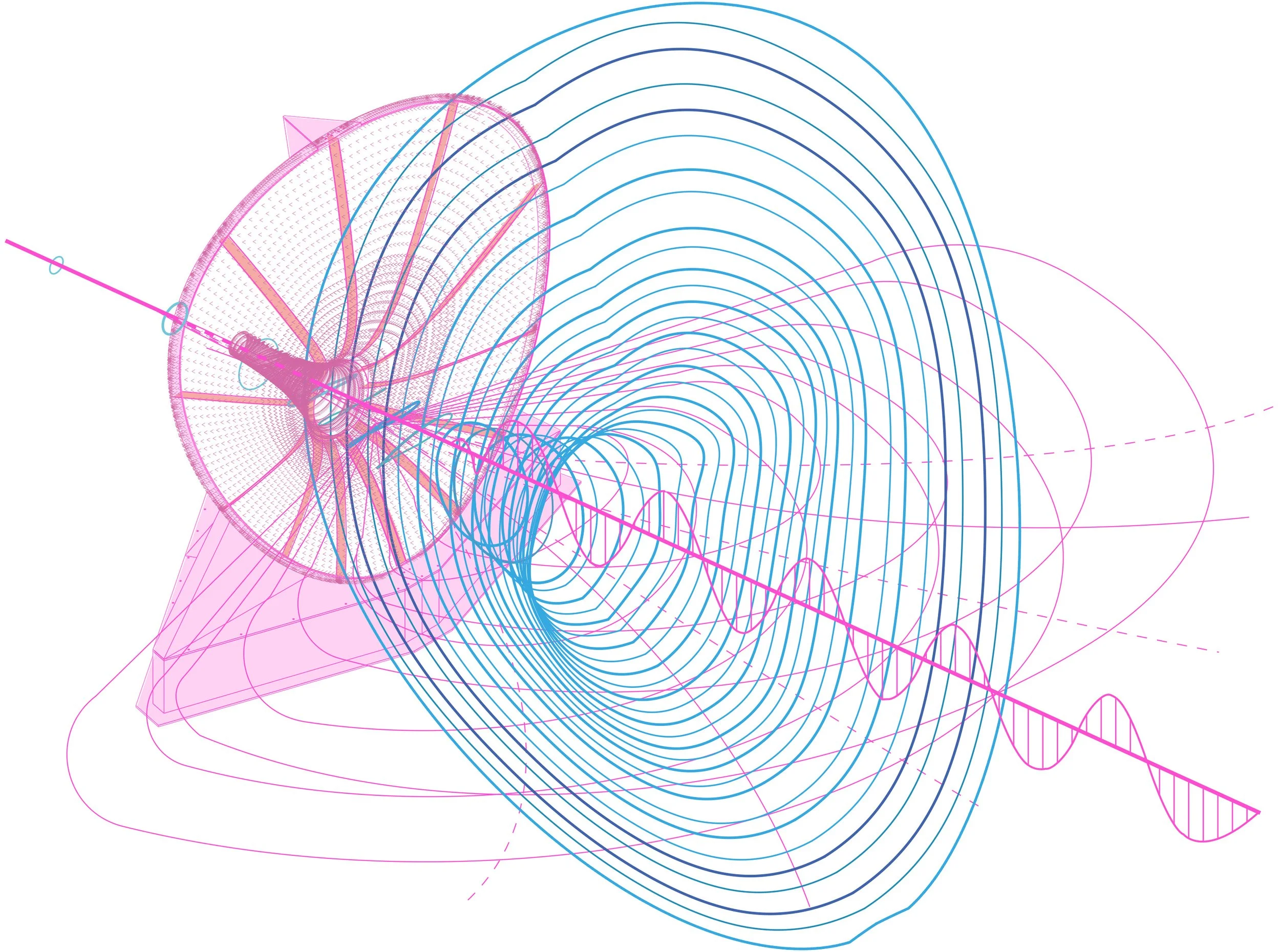
COSMO is a festival of temporary architecture that unfolds across the city of Siracusa and the territory of Pantalica, transforming them into an open-air laboratory for reading landscape, history, and contemporary forms of living. Curated by architect Francesco Moncada and the studio Moncada Rangel, COSMO explores architecture as a cultural practice capable of generating dialogue between past and present, permanence and temporality, context and imagination.
The festival is part of the broader project Siracusa Pantalica. Cultural and Touristic Route from the Neapolis Archaeological Park in Siracusa to the Necropolis of Pantalica, promoted by the Municipality of Siracusa and funded through a public call by the Italian Ministry of Tourism aimed at enhancing UNESCO-listed cultural landscapes.
COSMO constructs a physical and conceptual itinerary between Siracusa and Pantalica, two foundational places of the Mediterranean world. Through temporary installations, performances, and spatial interventions, the festival offers a unique experience of architecture and landscape, inviting the public to observe familiar places through a new lens.
The name COSMO derives from the Greek kosmos, a term that defined the harmonious order of the world. For the ancient Greeks, the cosmos was not merely the physical universe, but a system of relationships between nature, architecture, community, and shared values. COSMO adopts this original meaning as a framework to interrogate the present, placing historical heritage in dialogue with contemporary practices of architecture, art, and performance.
Conceived as a distributed urban laboratory, COSMO invites architects and creatives to intervene through temporary installations that activate existing spaces and return them to the public as places of encounter, reflection, and possibility. These interventions act as spatial manifestos, raising questions about the quality, use, and imagination of public space.
The first edition of COSMO is dedicated to the theme Context. Context is understood not as a constraint, but as a living and active condition with which to engage. The invited architects and artists were asked to reflect on Context as a material, cultural, and spatial reality, responding to the specific conditions of Siracusa and Pantalica through site-specific installations and performative actions.
In a city such as Siracusa, defined by centuries of stratification, the relationship with heritage is a constant presence. Yet this relationship often remains confined to preservation, leaving limited room for contemporary interpretation. COSMO emerges from the need to open this discussion, proposing temporary architecture as a tool for interpretation rather than imitation, capable of suspending certainties, encouraging new ways of seeing, and generating questions about the spaces we inhabit every day.
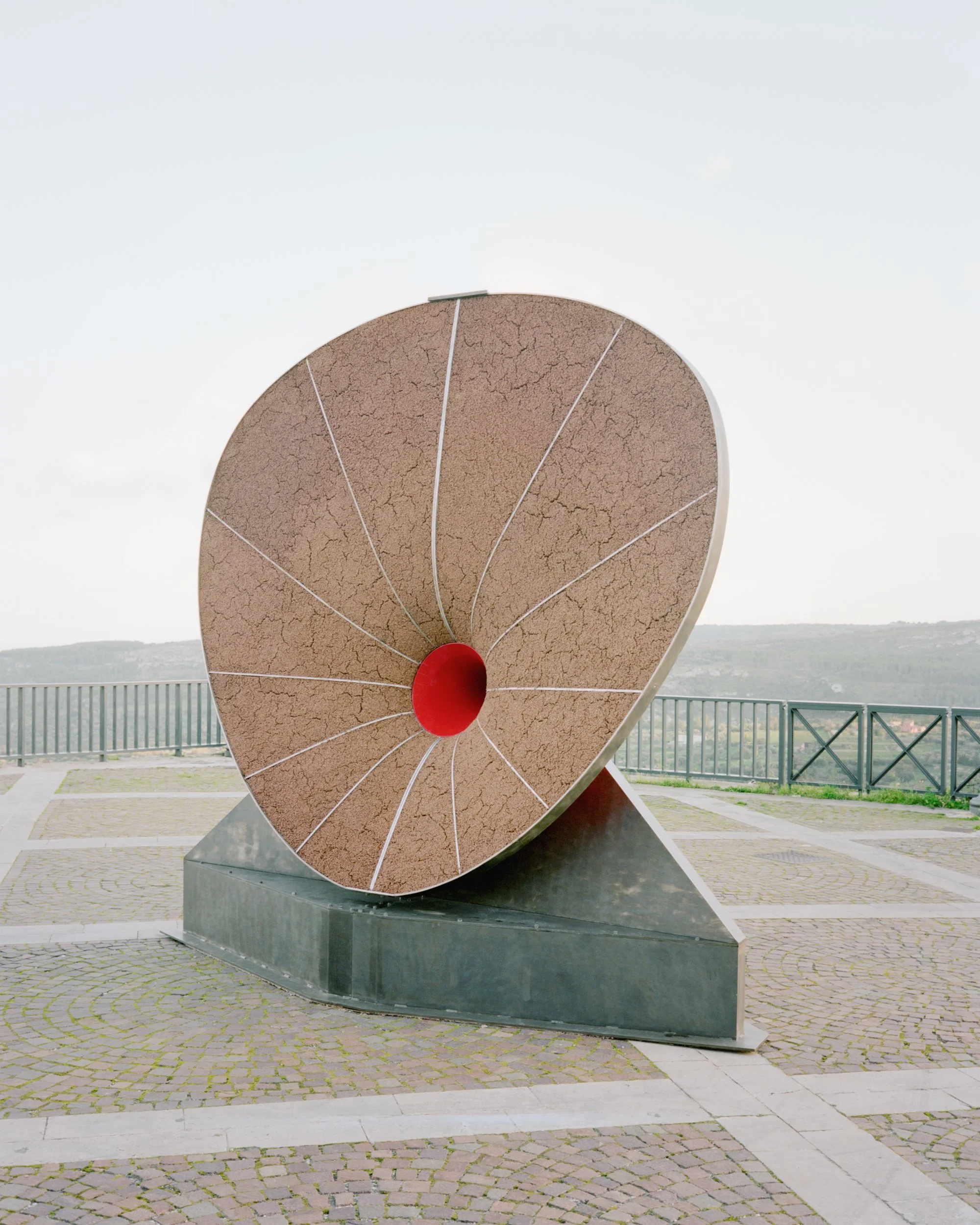
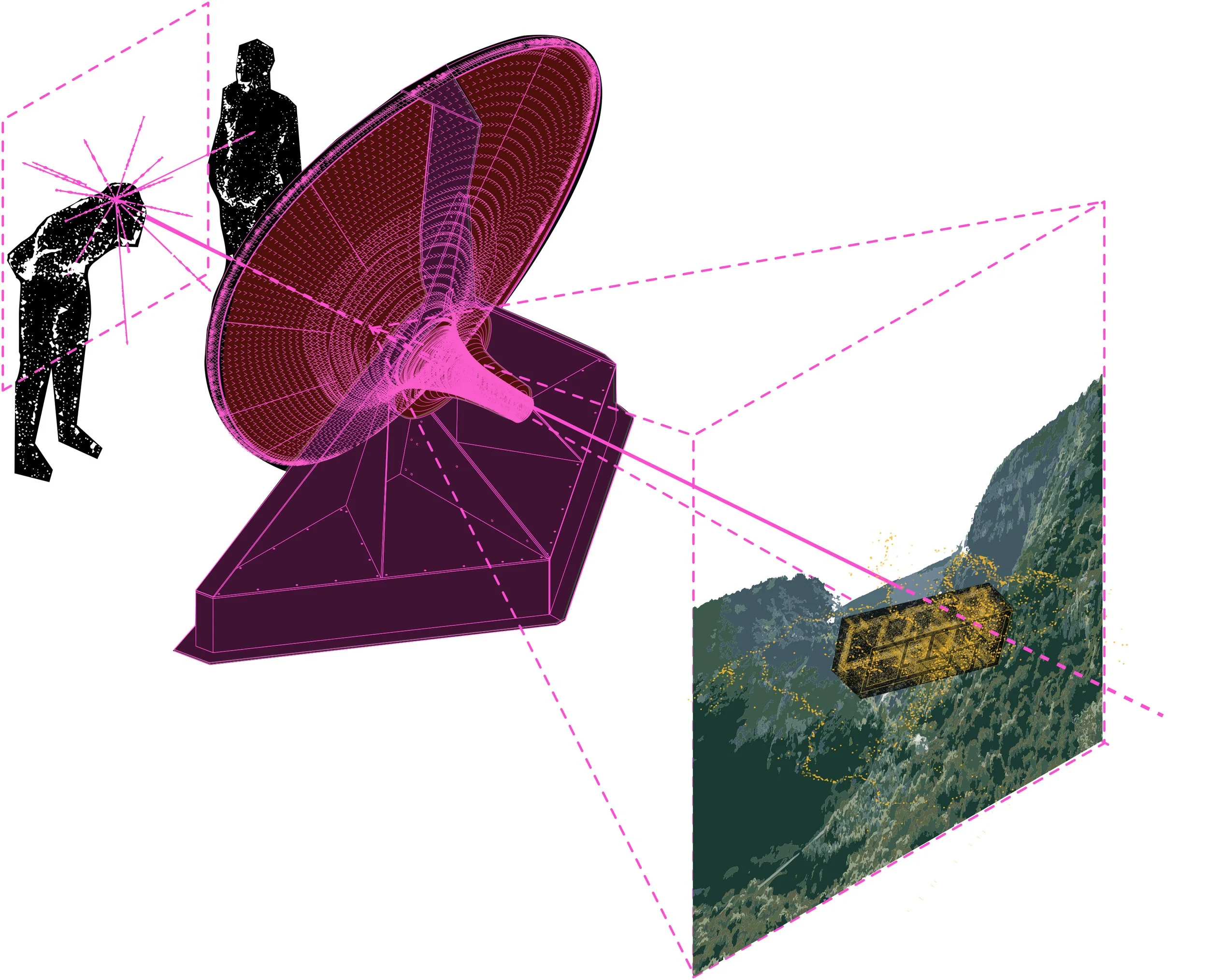
The three installations of the first edition trace a virtual thread between Siracusa and Pantalica, promoting the territory of Siracusa Pantalica through an alternative model of cultural production addressed to an international audience. By inviting architects and artists whose work has shaped contemporary discourse on architecture, public space, and the relationship between body, landscape, and construction, COSMO positions Siracusa and Pantalica within an international network of research and experimentation, reaffirming architecture as a cultural practice capable of producing vision, dialogue, and awareness.
Asympta
Belvedere della Turba, Ortigia, Siracusa
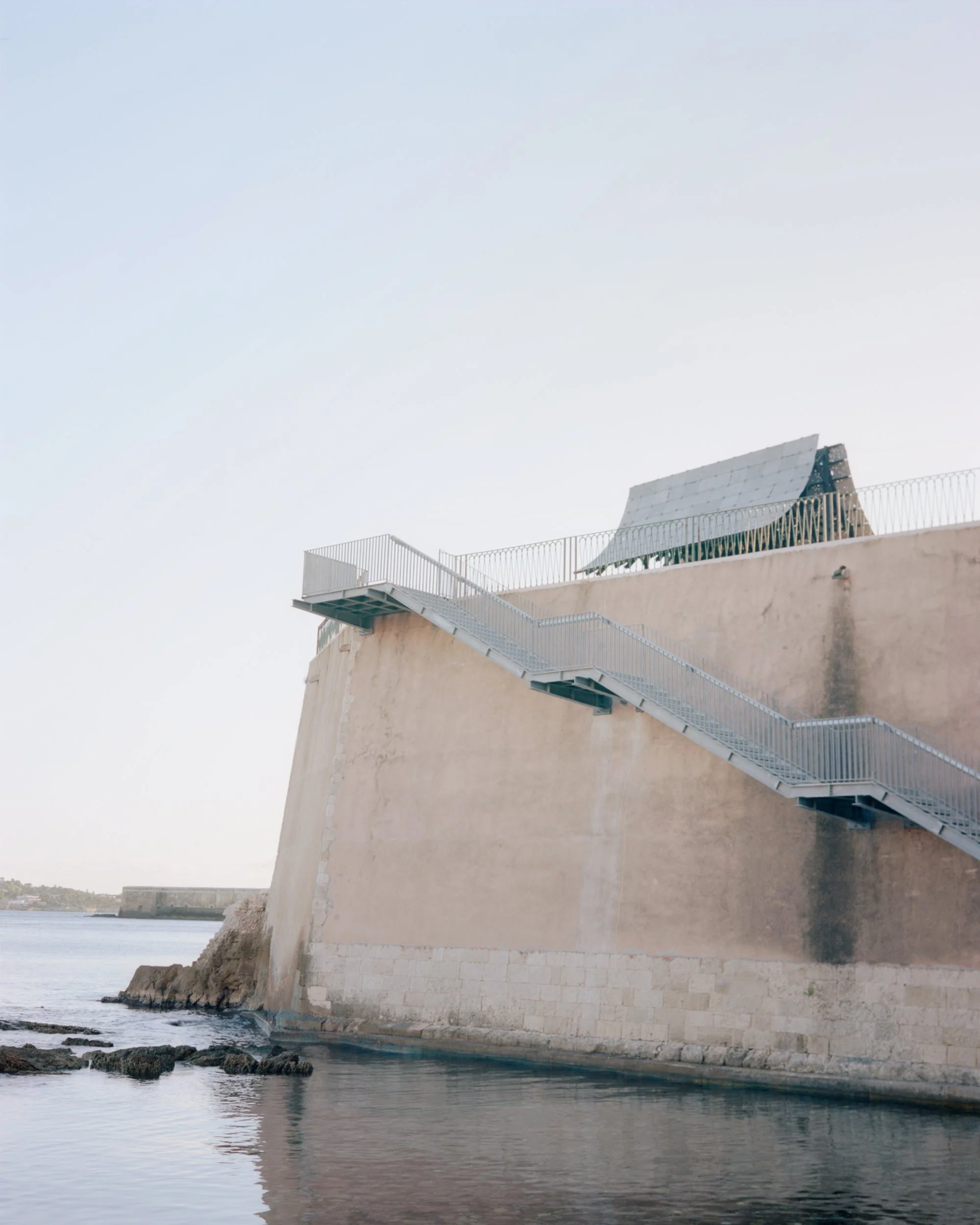
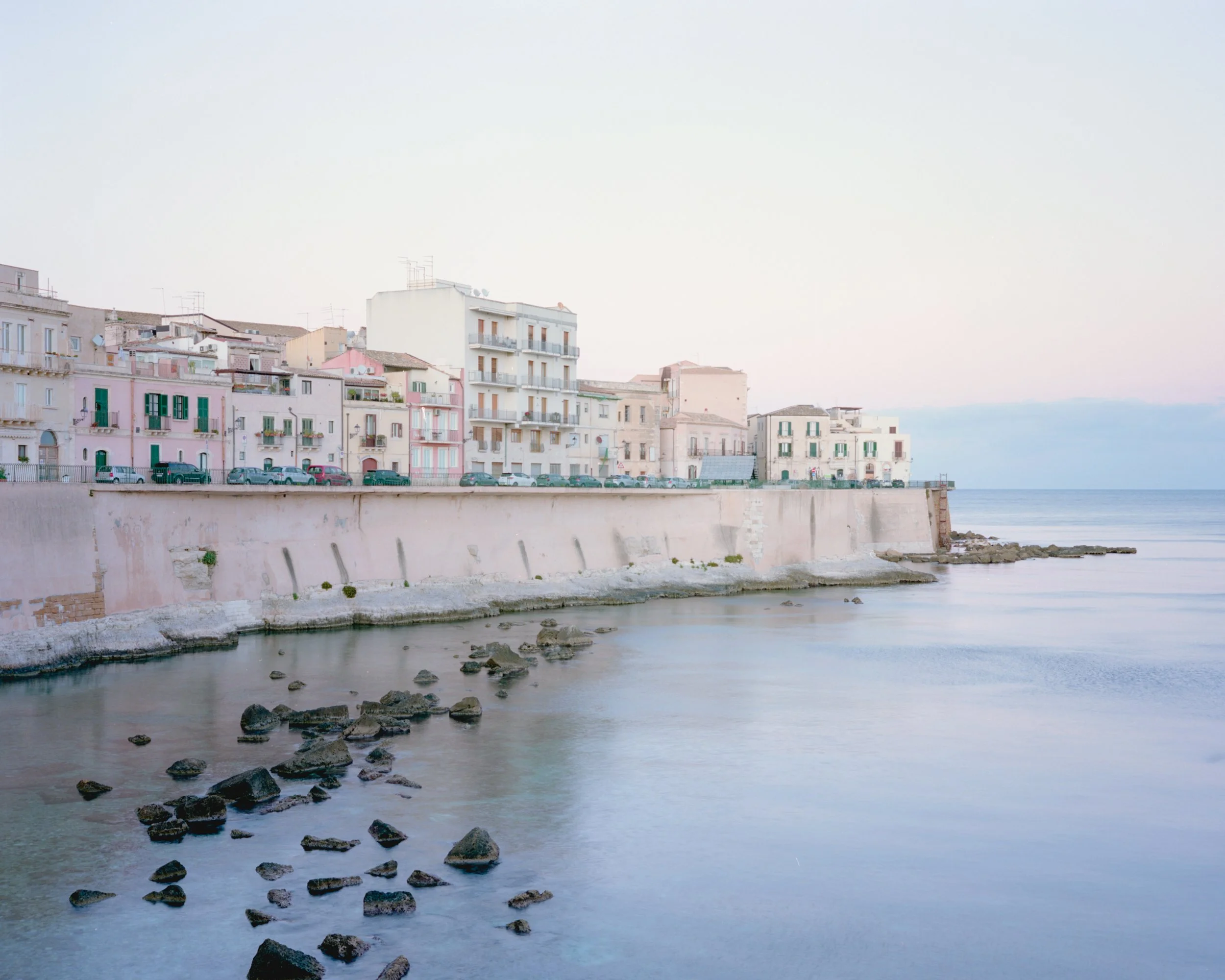
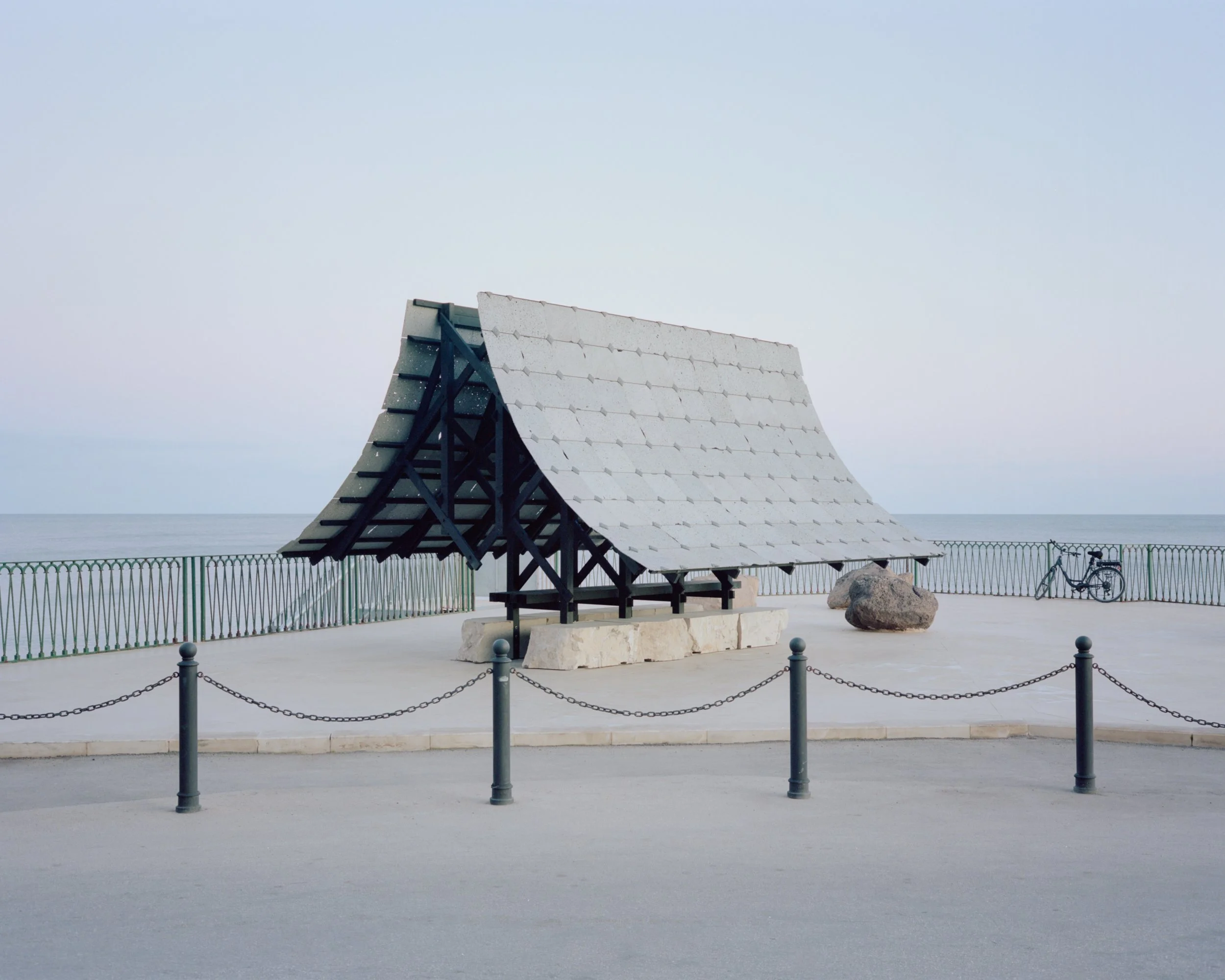
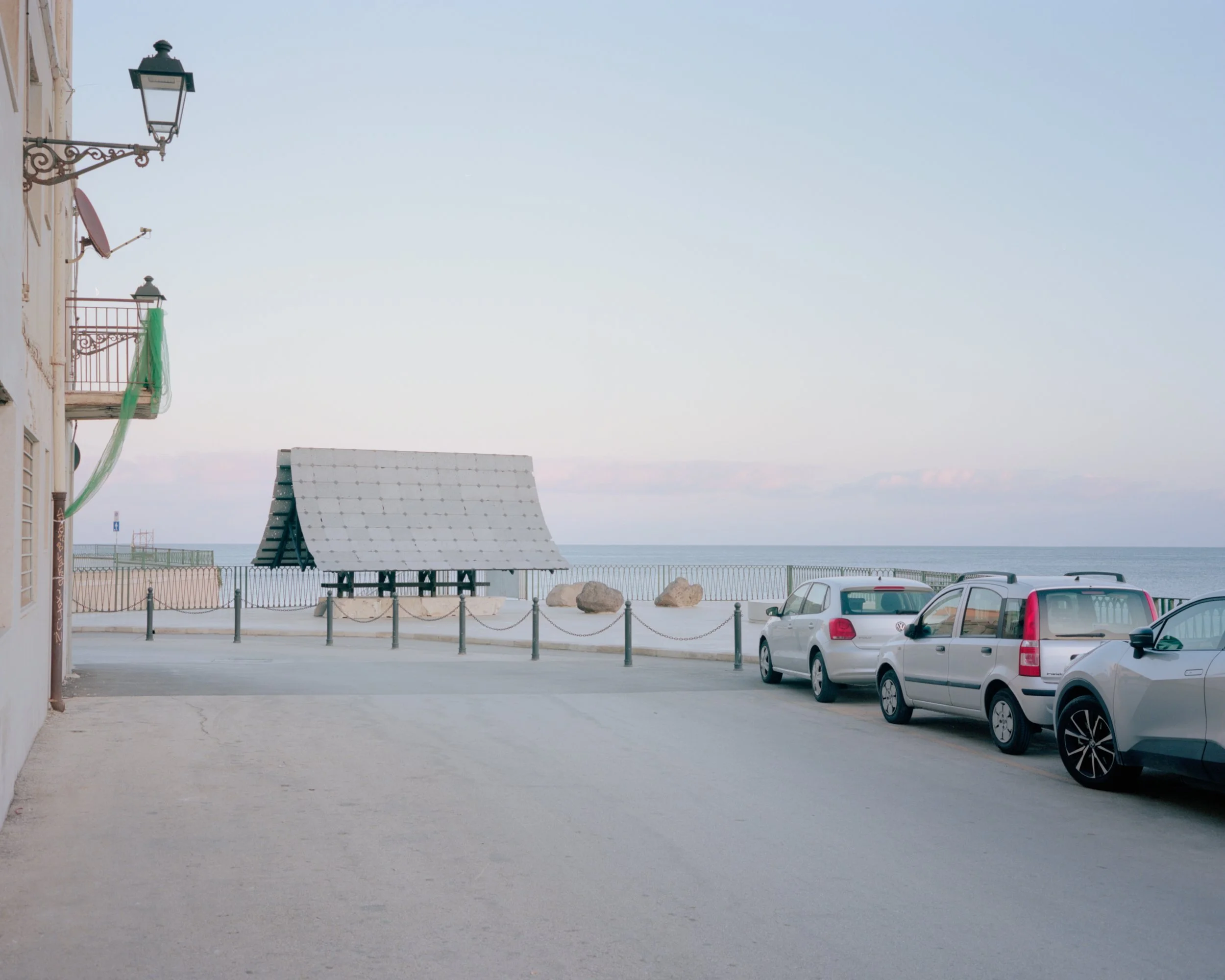
The first intervention is located in Ortigia, at the Belvedere della Turba, a small square recently transformed from a former parking area into an open urban space overlooking the sea. This transformation, enabled by the vision of the local administration, has returned to the city a new relationship with the eastern coastline of the island. Within this setting, Swiss architect Leopold Banchini has conceived a temporary urban shelter.
Leopold Banchini is an architect and curator whose work operates between architecture, theoretical research, and curatorial practice. A central theme in his research is that of the shelter, understood not only as a device of physical protection, but as a primary architectural form that condenses fundamental needs such as orientation, sharing, and relationship with the environment. Through minimal, temporary, and sometimes self-built structures, Banchini explores how architecture can reveal often invisible social, political, and cultural dynamics.
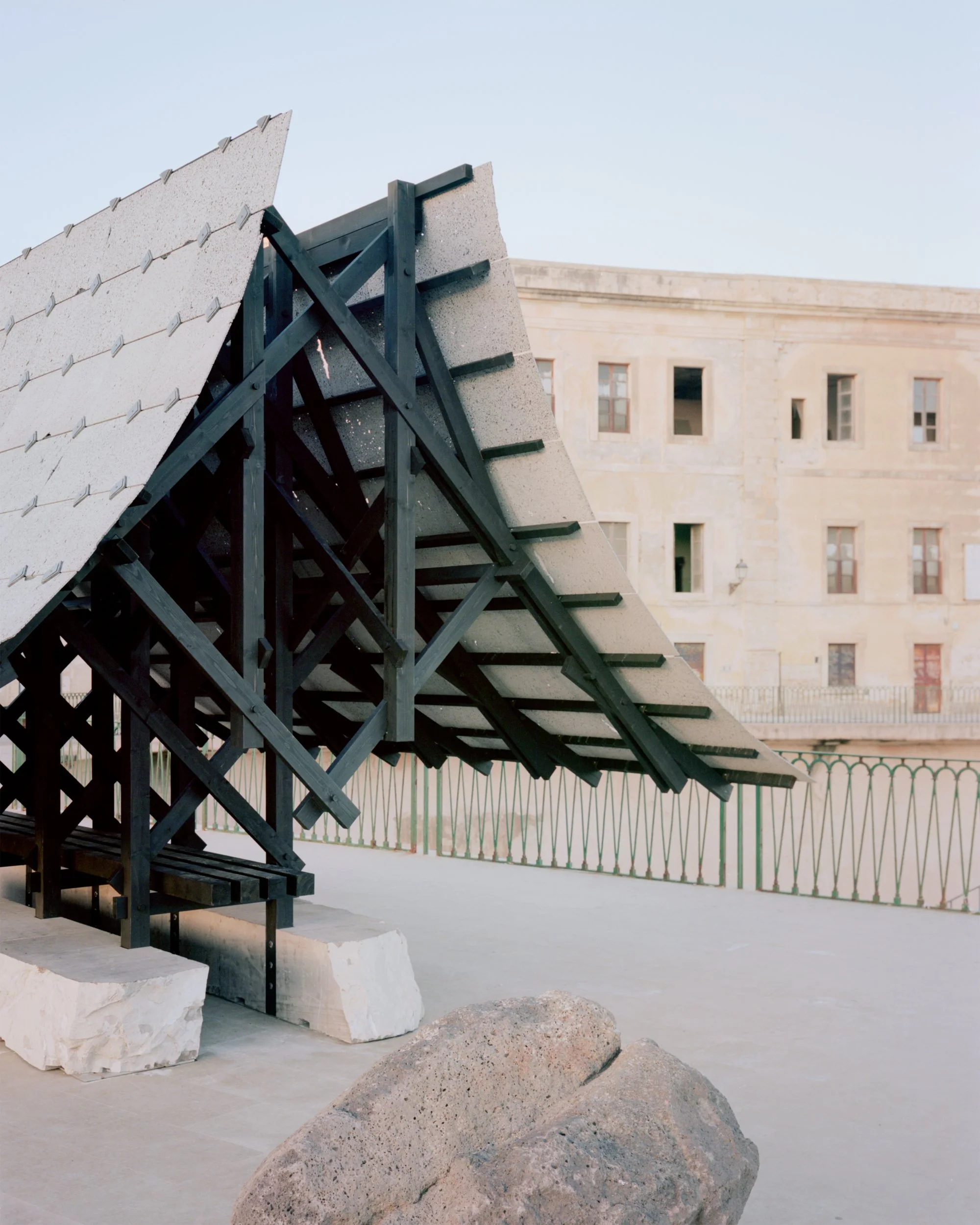
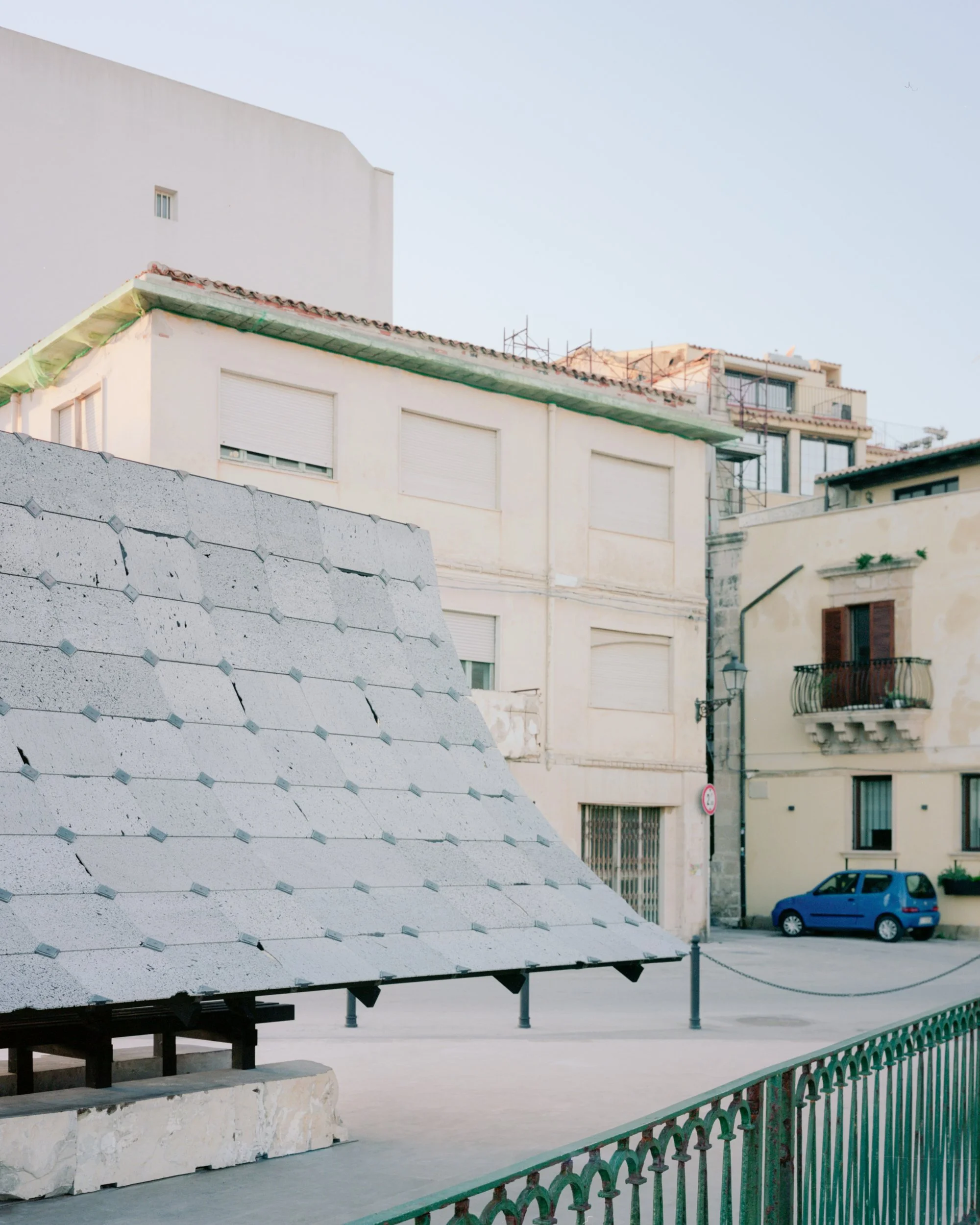
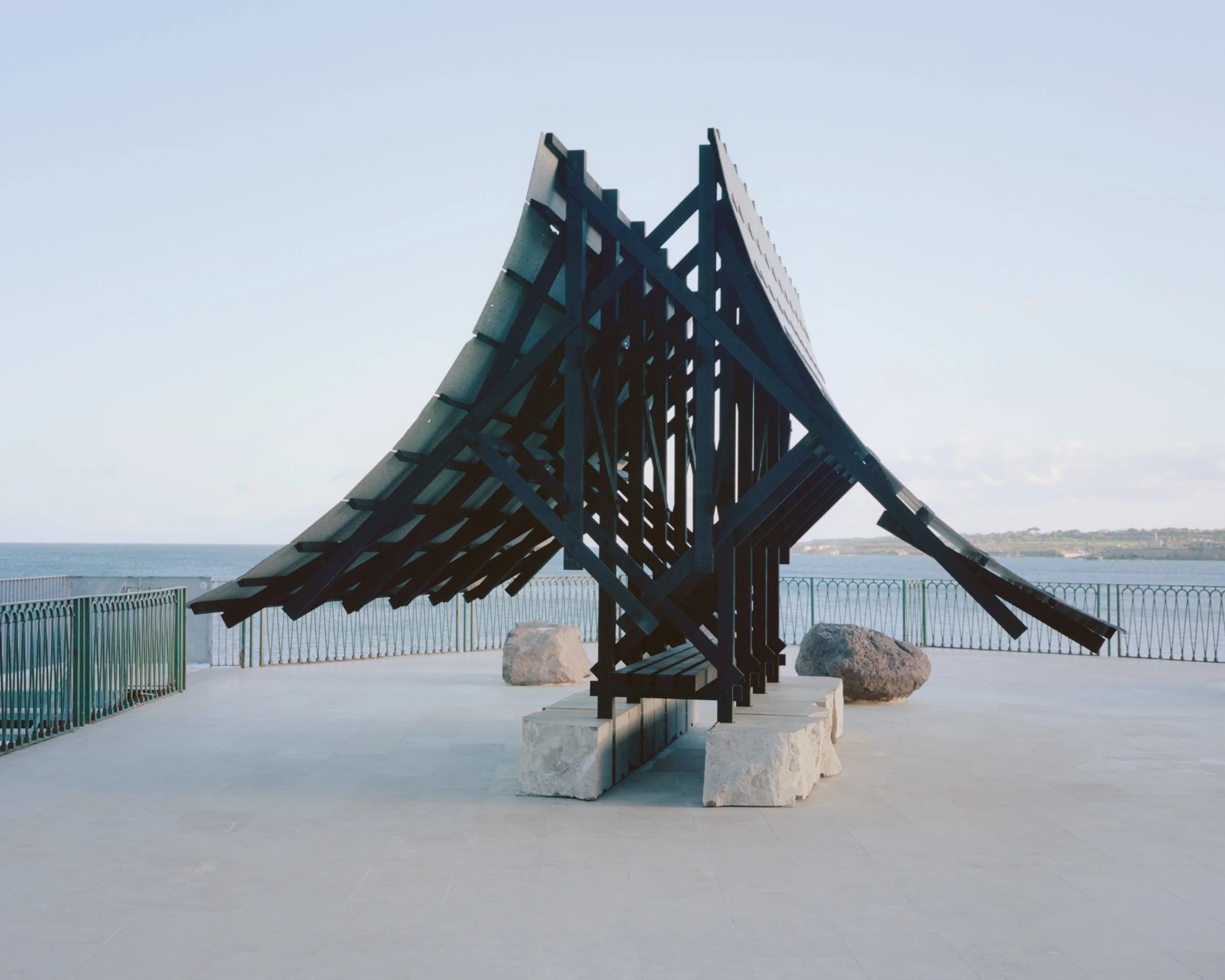
Asympta is a speculative micro-architecture that reflects on the largely unknown architectural landscape of prehistoric civilizations, rather than on their more familiar funerary monuments. The project explores how architectures and cosmologies might emerge from a specific landscape, in dialogue with its topography and material resources. Deliberately distancing itself from archaeological or scientific reconstructions, the installation generates fictional narratives rooted in both vernacular traditions and contemporary construction methods.
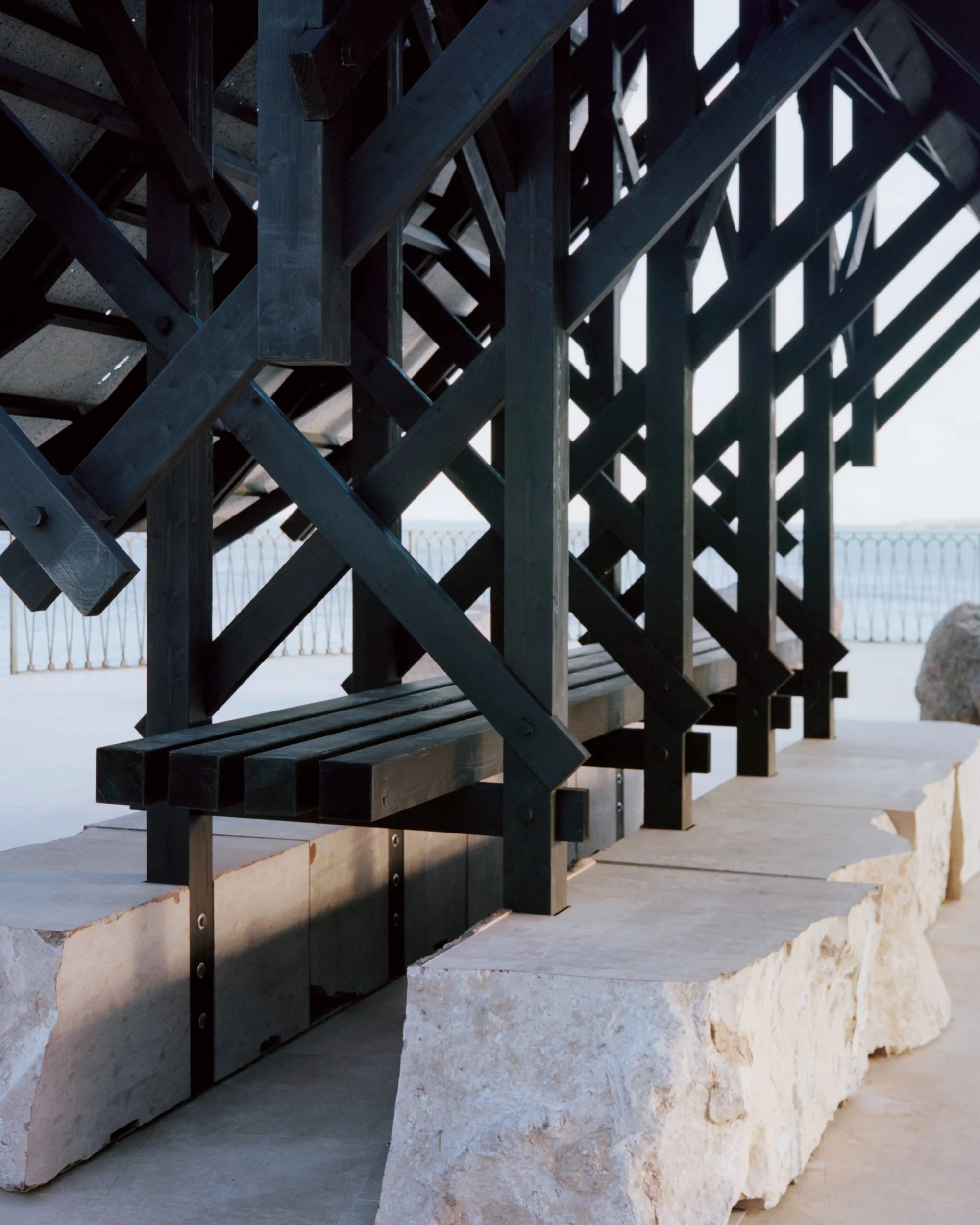
Built using superficially charred wood, limestone, volcanic stone from Mount Etna, bronze, and sheep wool felt, the structure offers a shaded space for meeting and contemplation. Its double asymptotic form recalls both the volcanic cone that dominates the landscape of eastern Sicily and the excavation geometry of nearby latomies. Open and permeable, the installation speaks of proximity, adaptability, and reciprocity with the surrounding landscape, proposing a critical reflection on the romantic myth of Laugier’s Primitive Hut.default
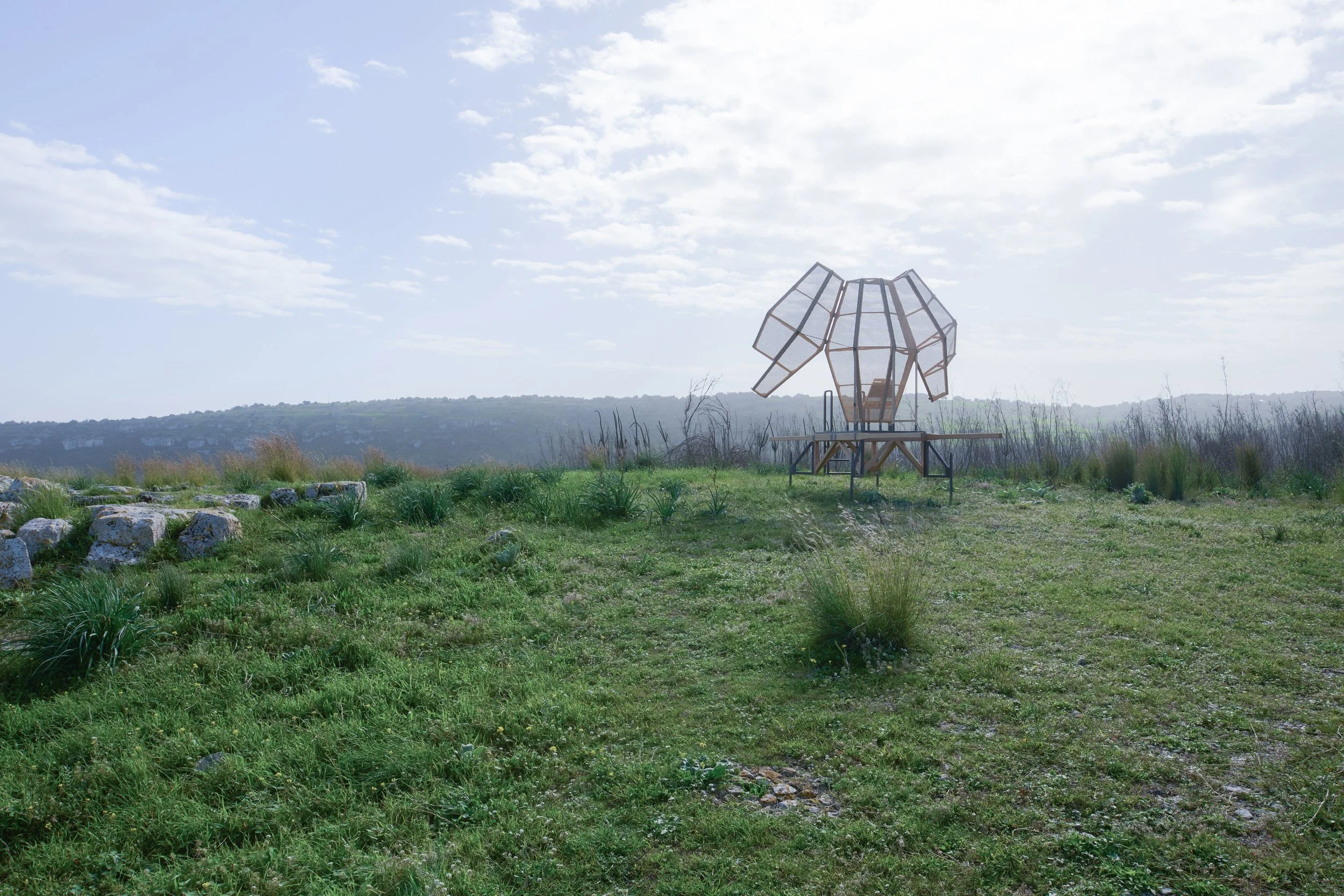
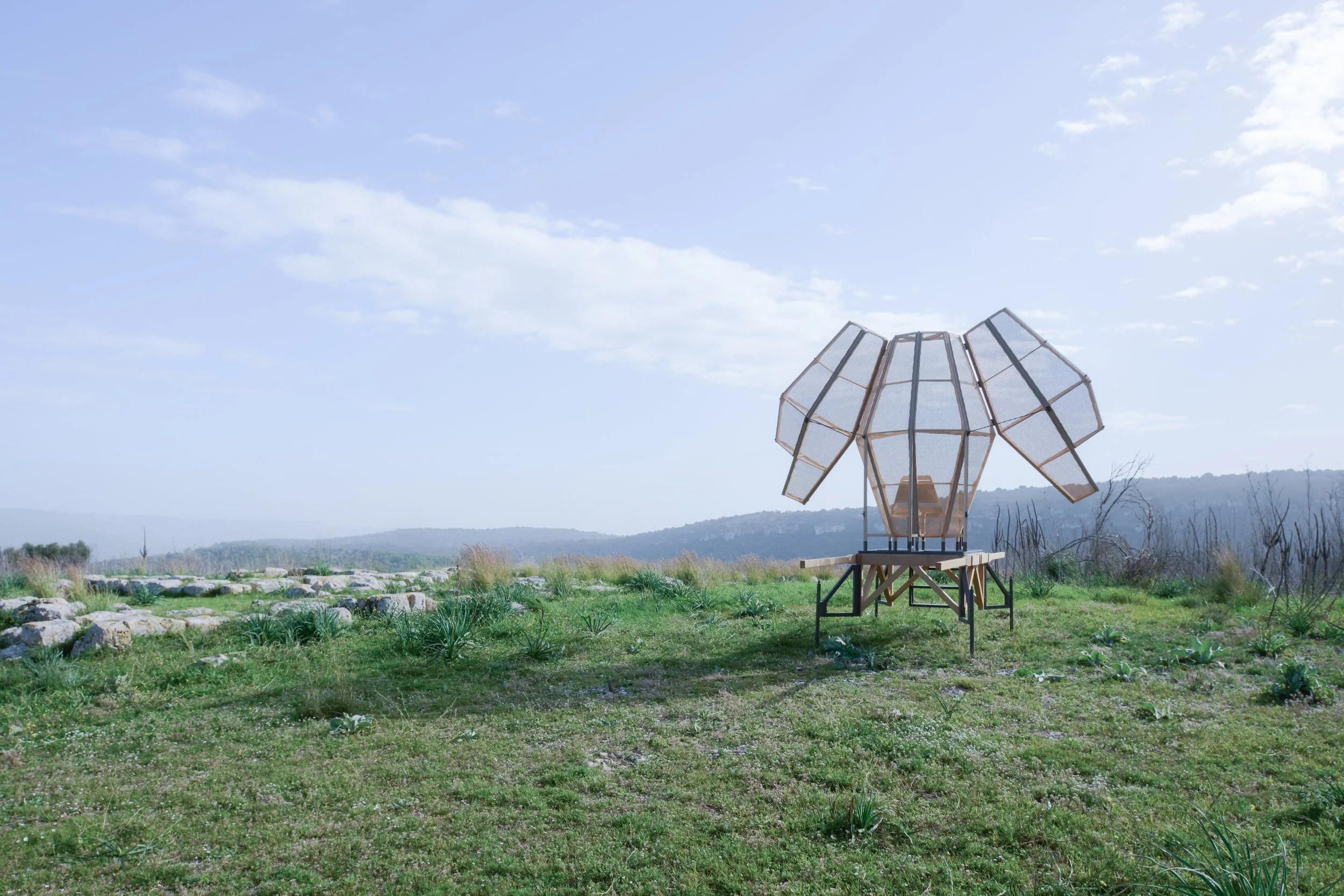
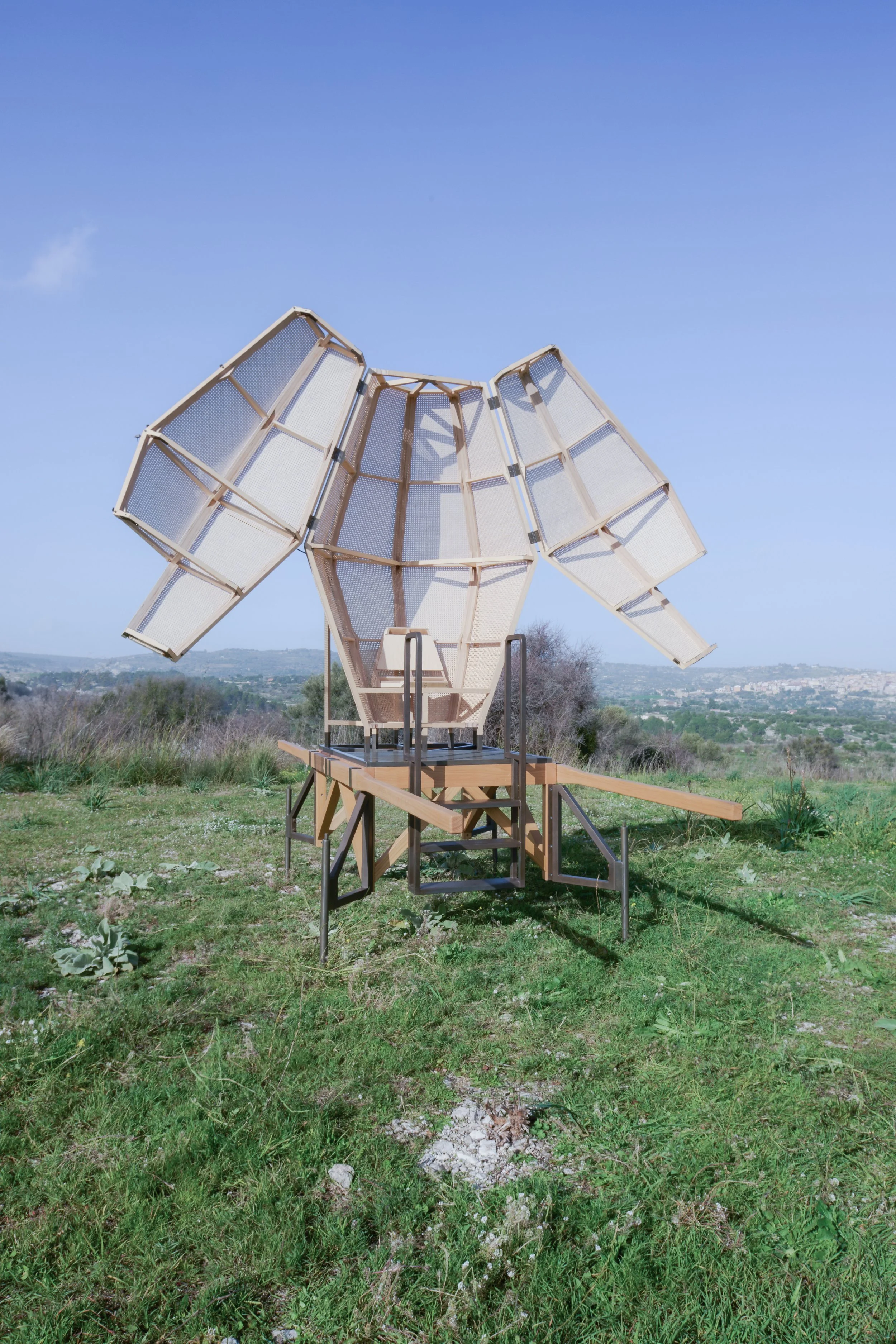
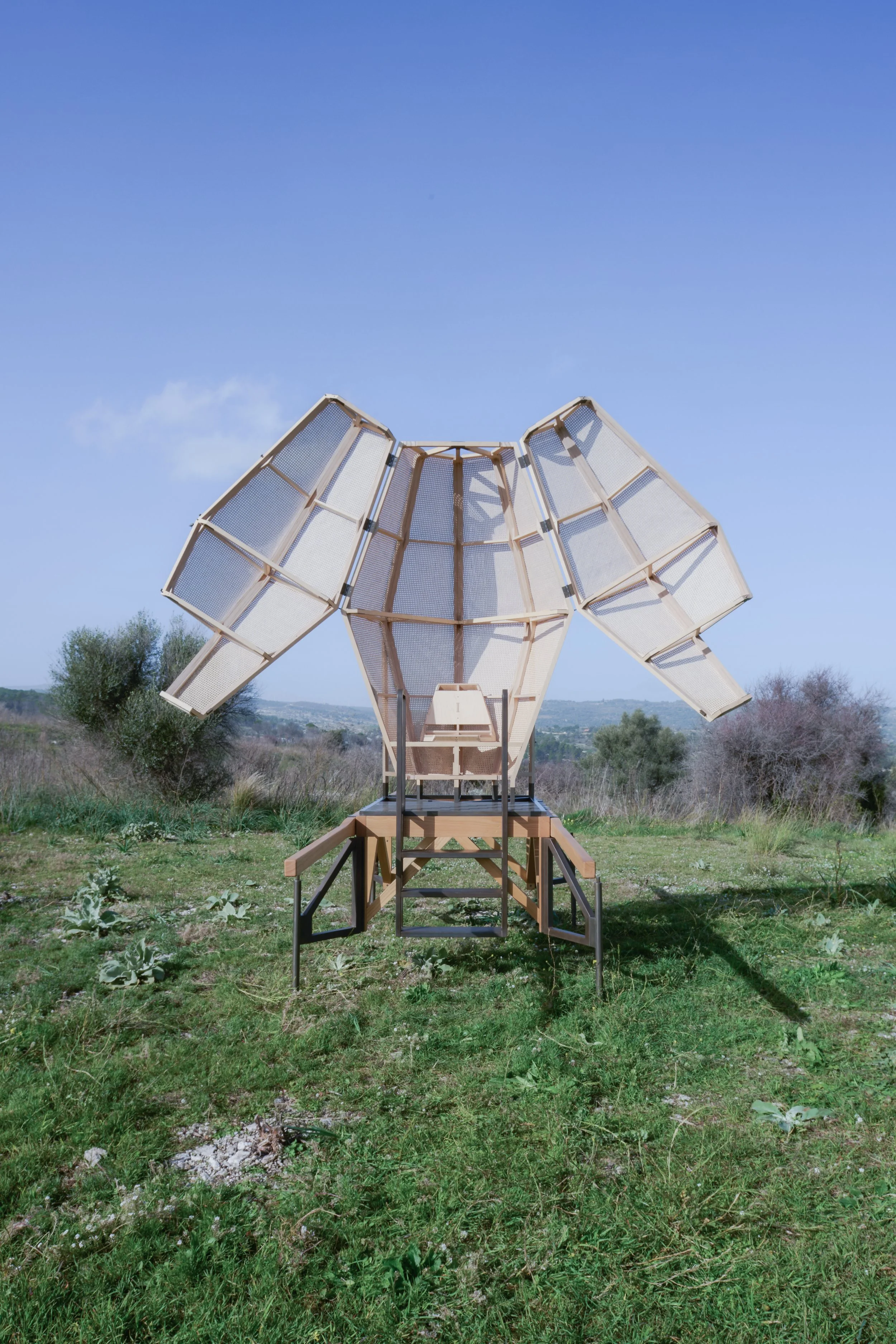
Personal Kingdom
Anaktoron, Pantalica
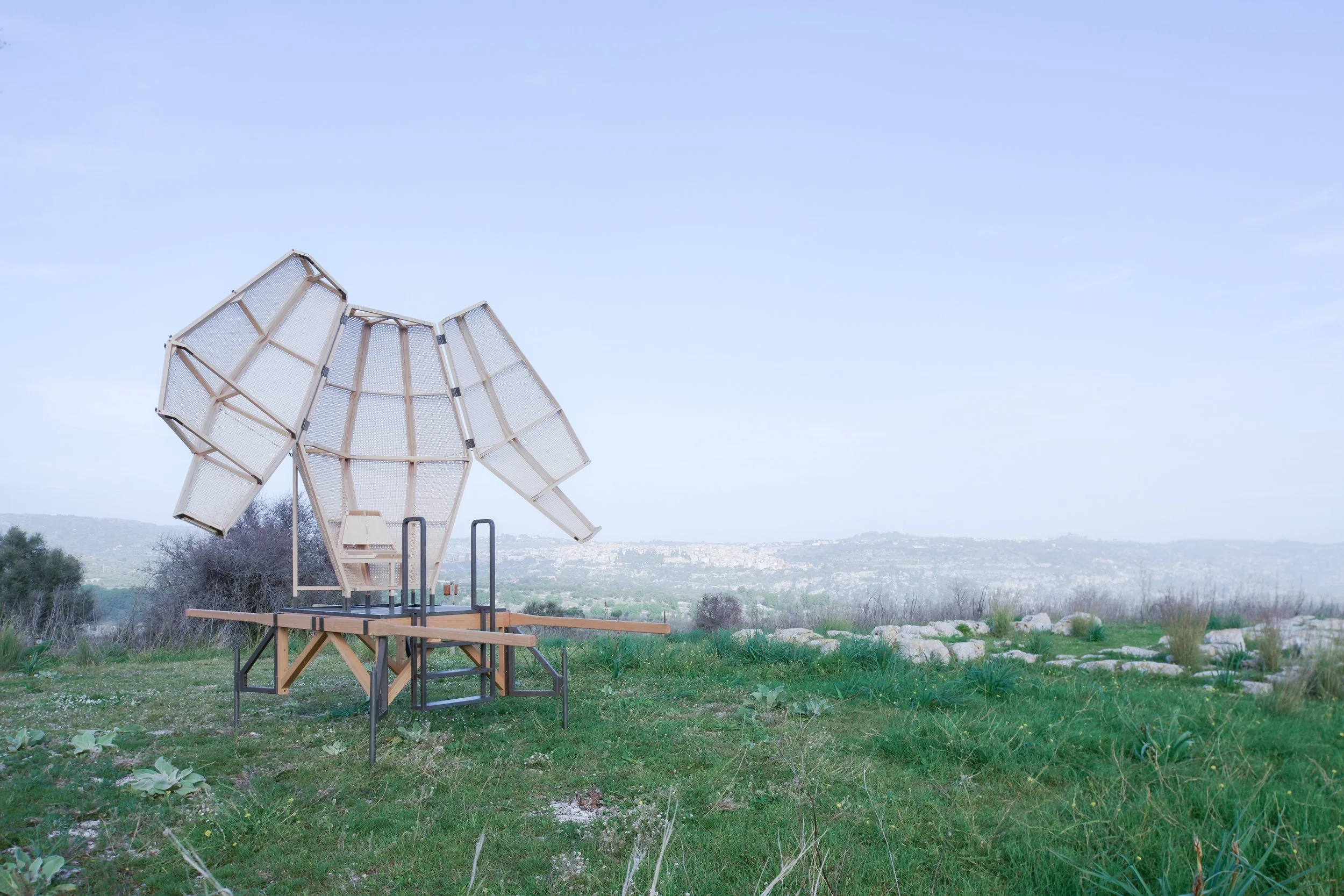
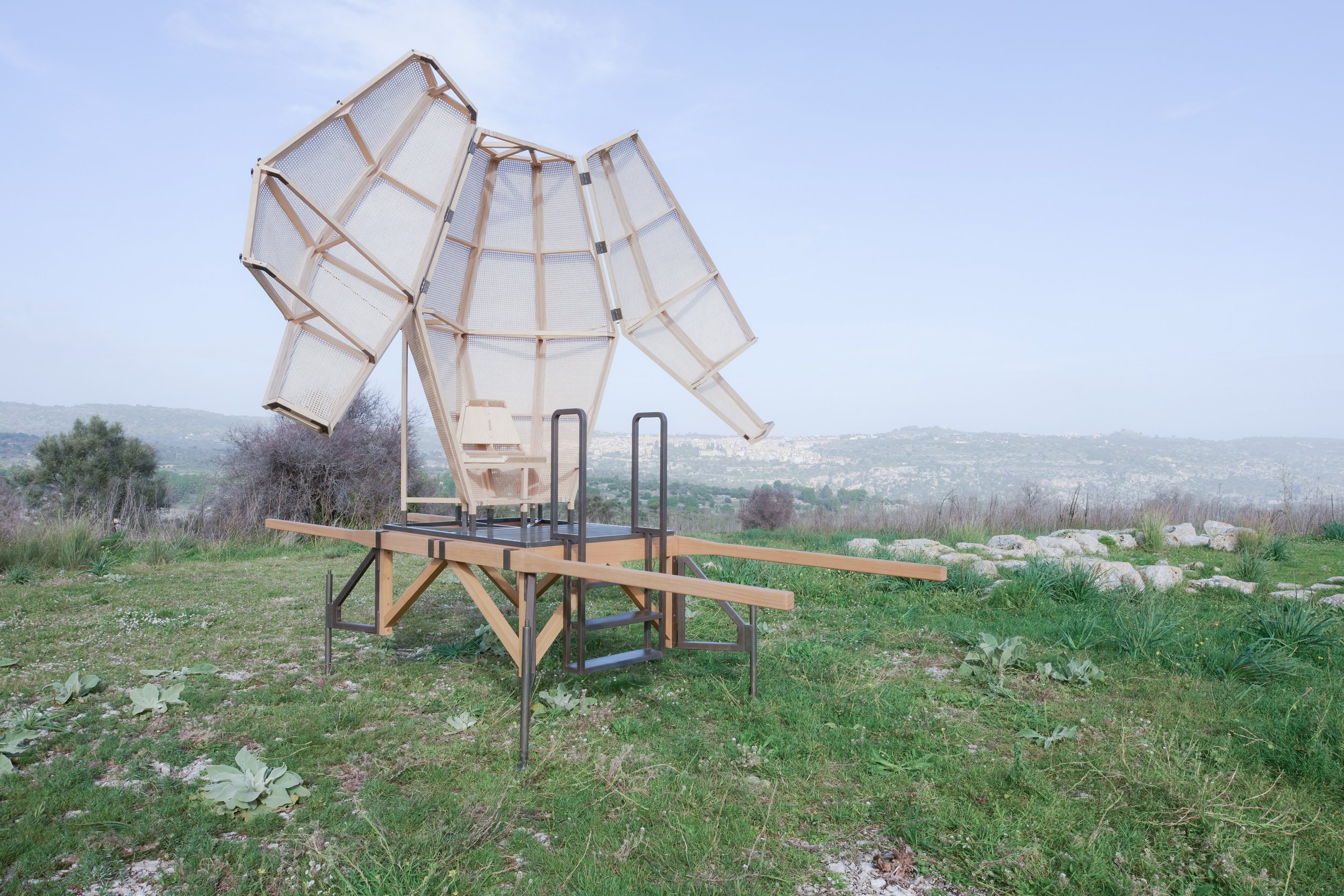
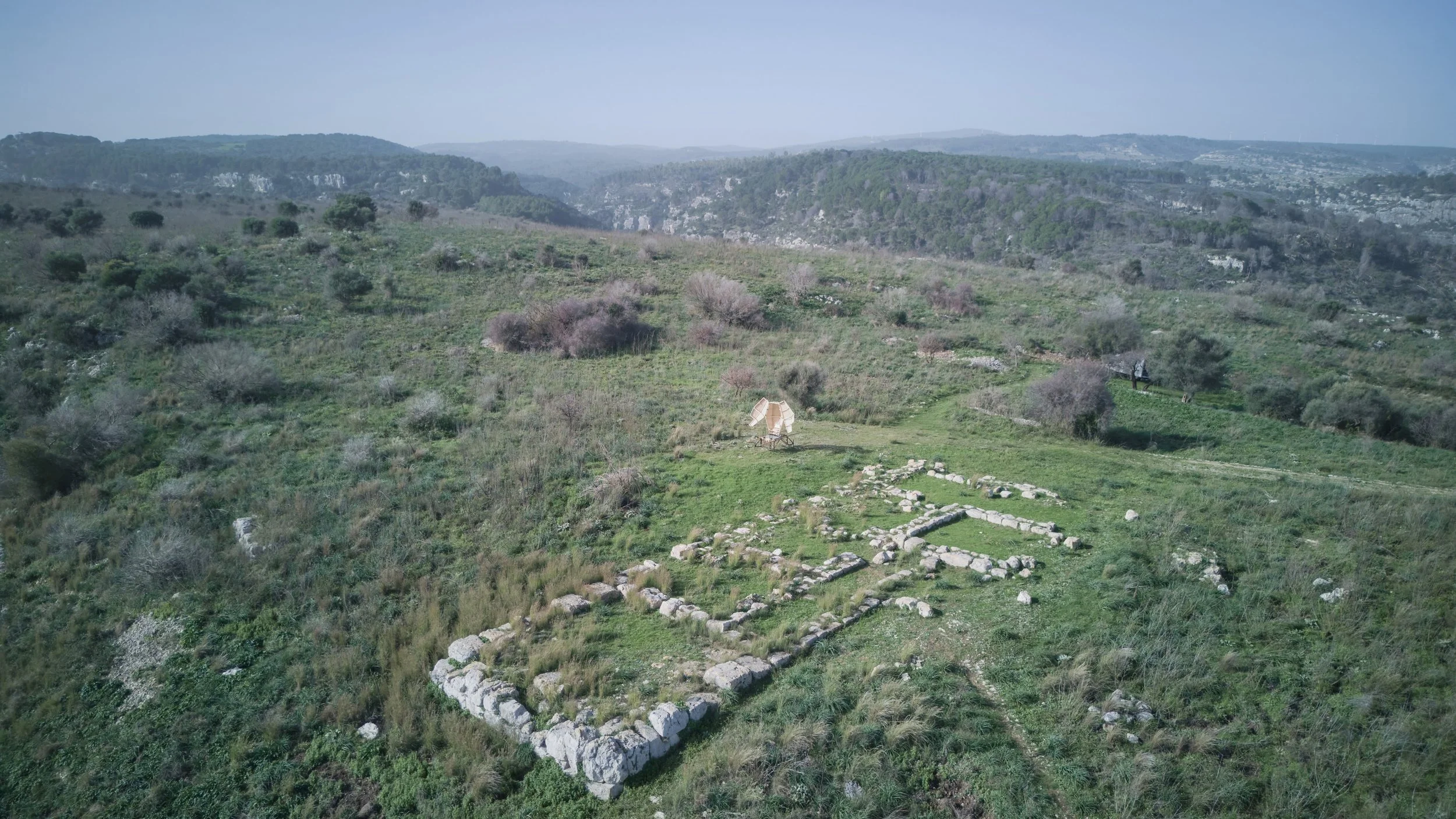
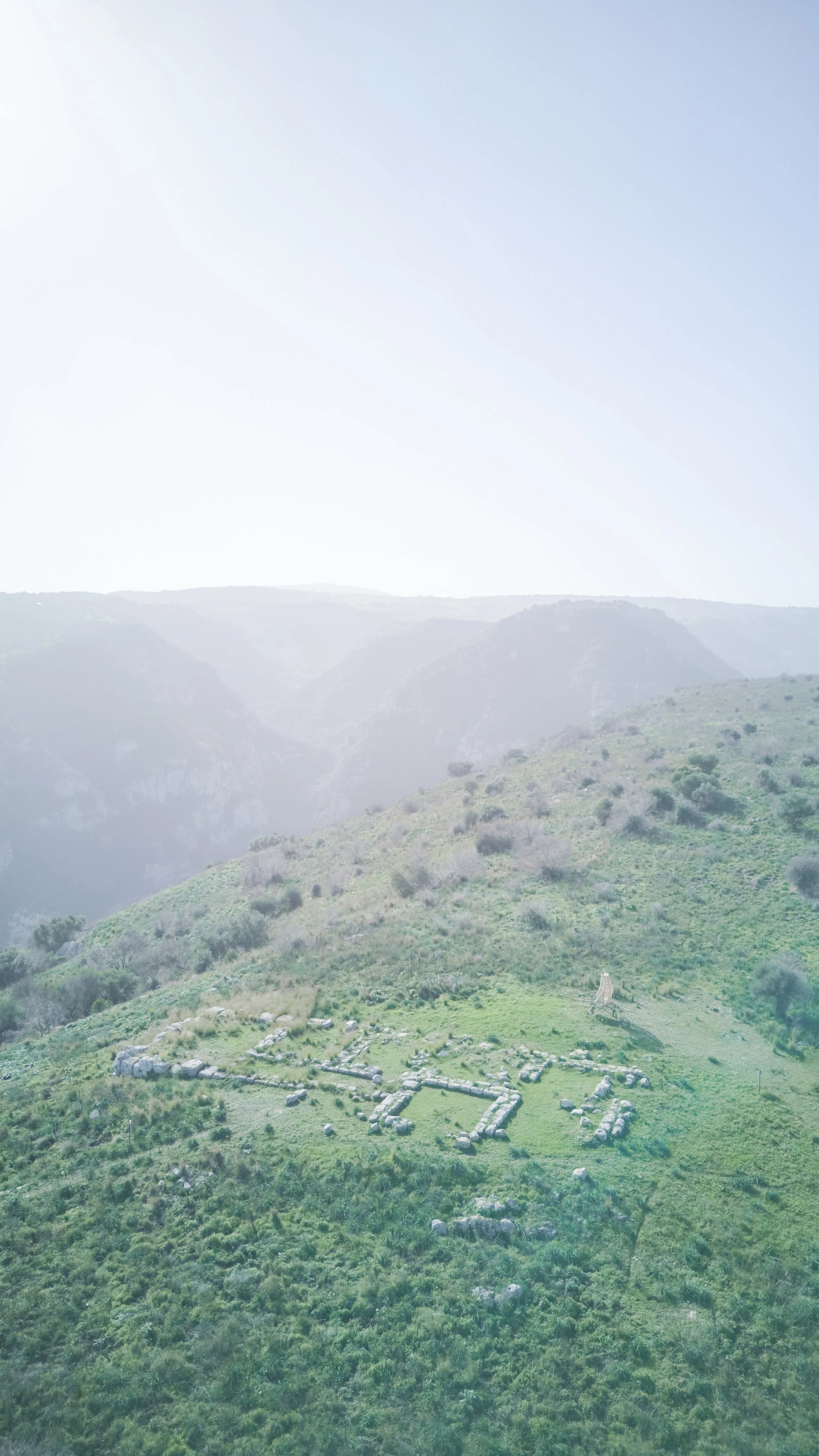
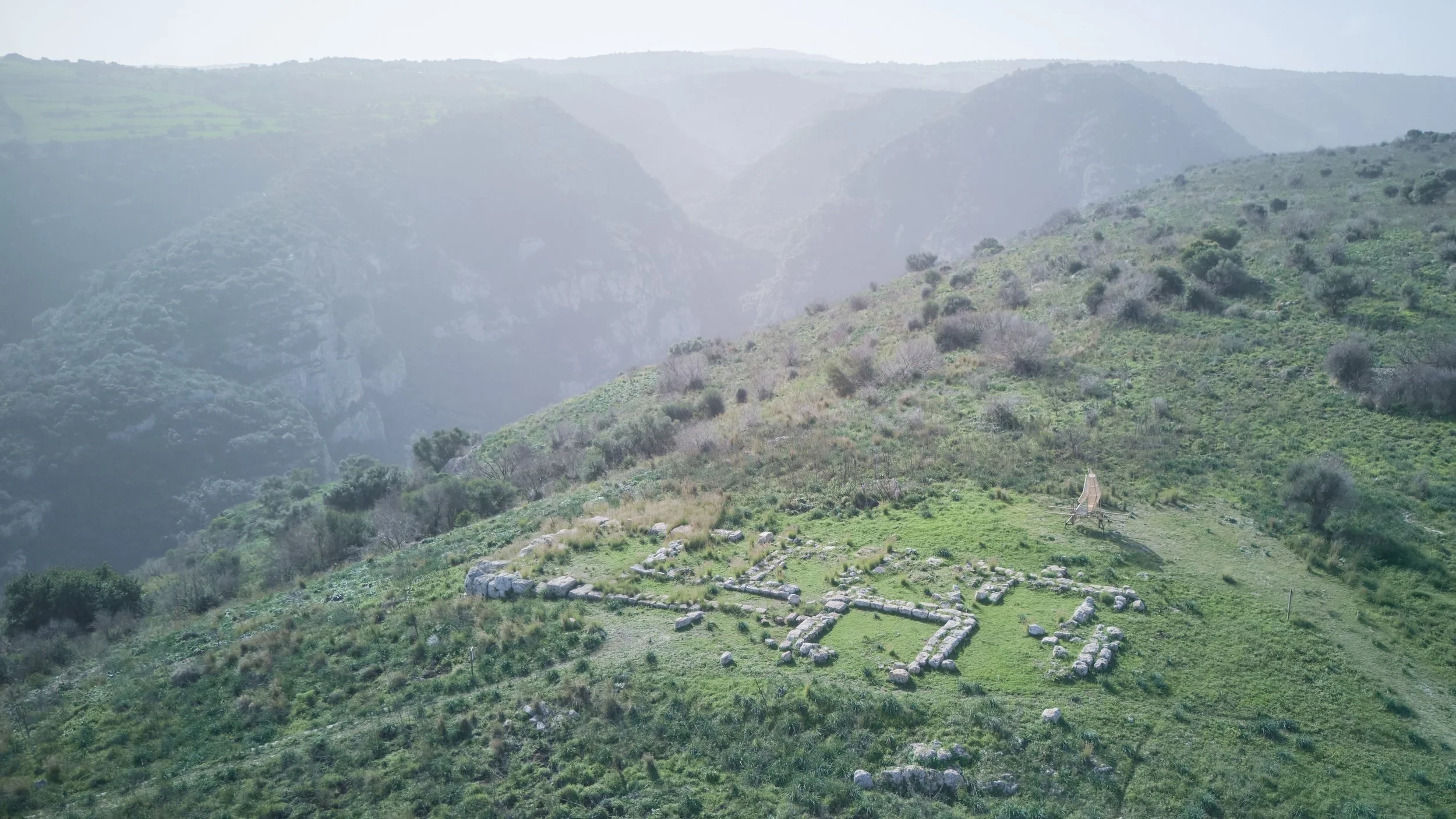
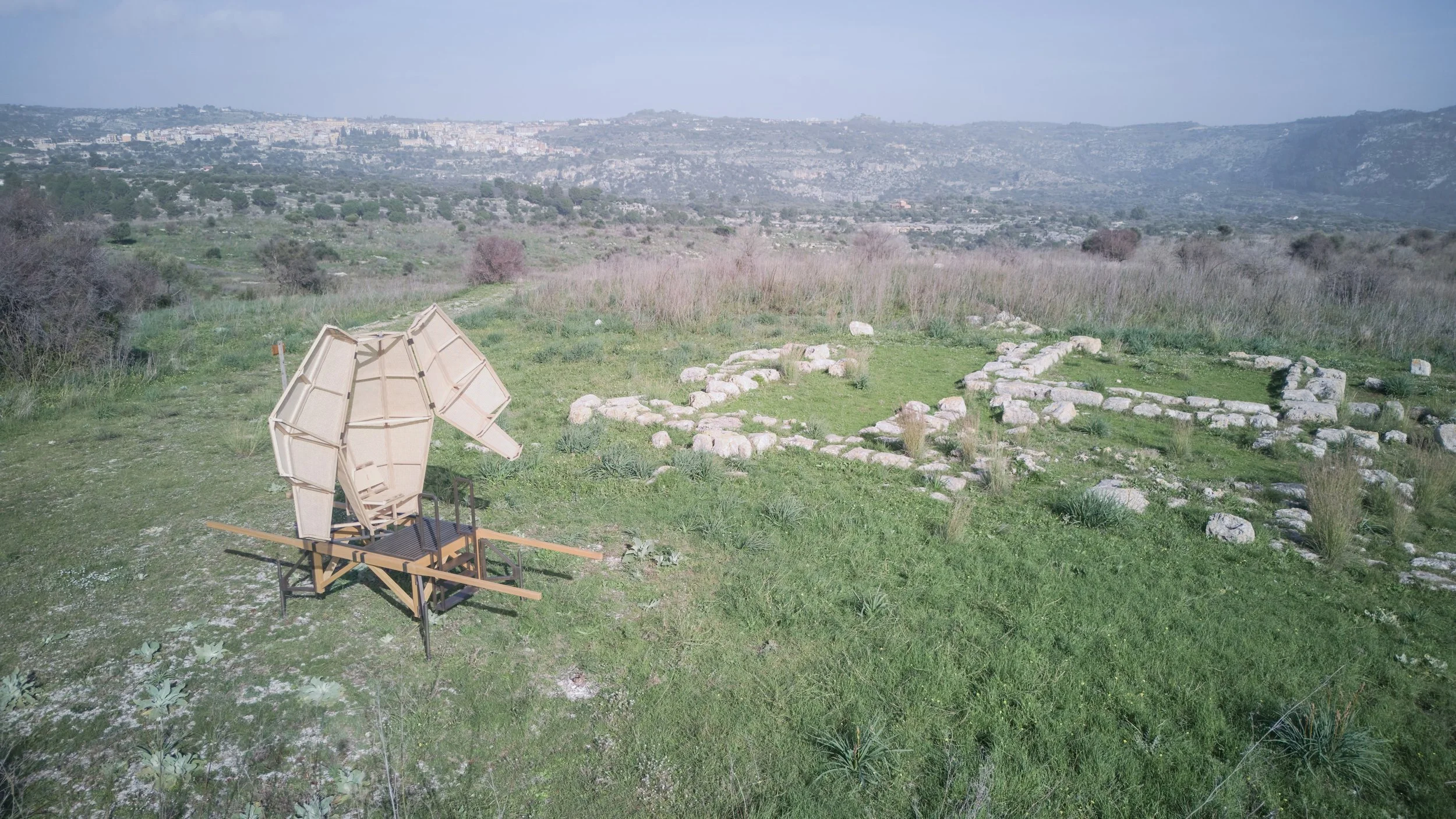
The festival concludes in Pantalica, near the Anaktoron, with Personal Kingdom, a project by artist and architect Didier Fiúza Faustino, installed and activated as a one-day performance.
Didier Fiúza Faustino is a French-Portuguese architect and conceptual artist whose practice operates at the intersection of art and architecture. His work explores the relationship between body and space, investigating how social, political, and physical norms shape our experience of the built environment. Over the years, his practice has taken the form of installations, performances, scenography, editorial projects, and both temporary and permanent architectures, often conceived as critical devices rather than conventional buildings.
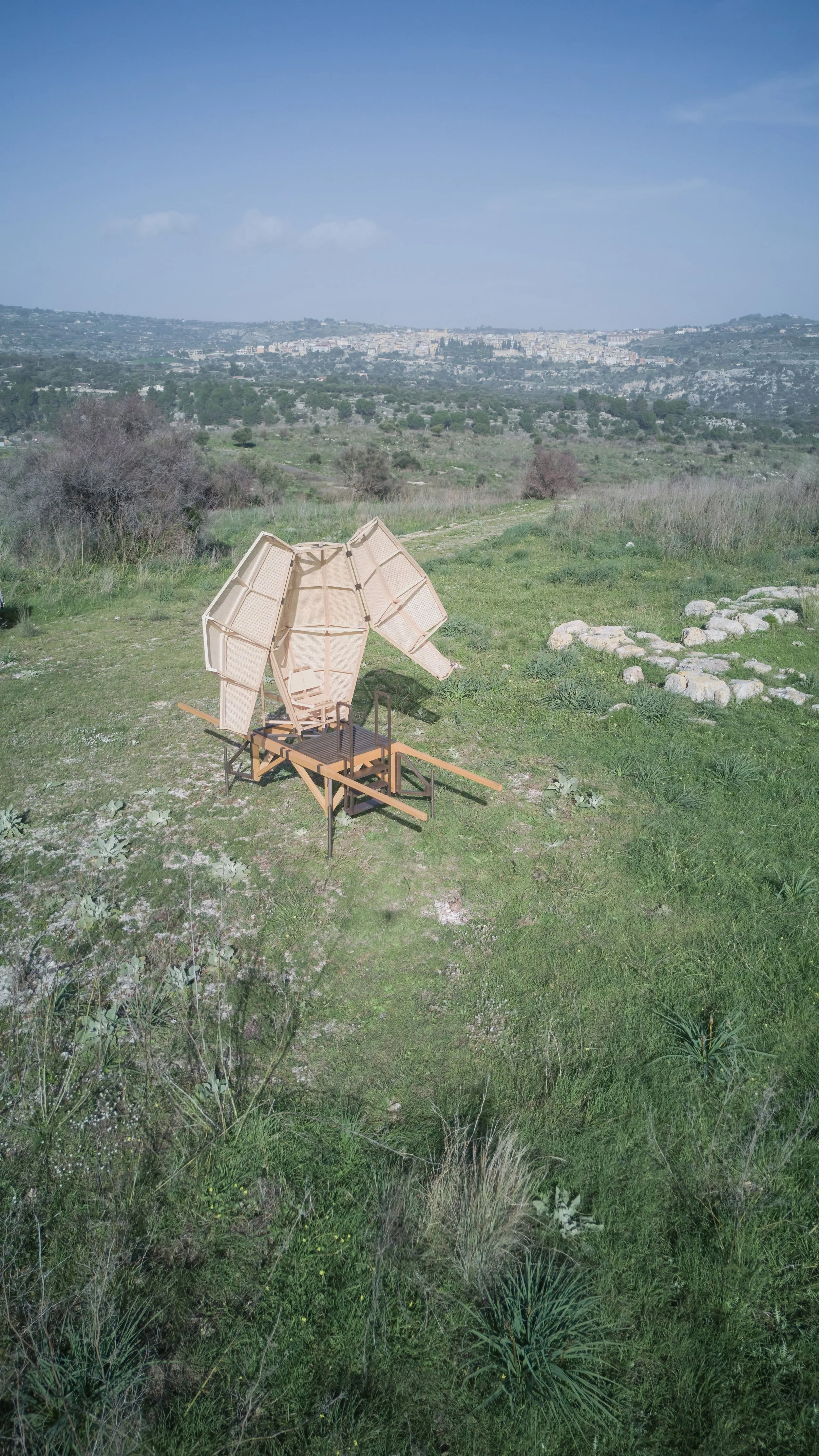
Personal Kingdom is a performative pavilion that reflects on notions of territory, ritual, and individual presence within a collective and ancestral landscape. Installed for a single day at the Anaktoron of Pantalica, the work reinterprets the tradition of Sicilian religious processions, transforming it into a contemporary action that brings together body, movement, landscape, and primitive architecture.
Through an ephemeral yet intense gesture, the pavilion becomes a temporary domain defined not by walls or permanence, but by presence, action, and shared experience. The performance reactivates the original meaning of the site, drawing attention to the relationship between community, sacredness, and constructed space, and reinforcing COSMO’s exploration of architecture as a cultural and symbolic act rather than a purely physical object.
